By clicking “Accept”, you agree to the storing of cookies on your device to enhance site navigation, analyse site usage, and assist in our marketing efforts. View our Privacy Policy for more information.
How New Industries Are Embracing Innovations in Automotive Visualisation
September 17, 2026
The automotive industry has always set the gold standard for visualisation in sales and marketing; from the early days of CAD to today’s real-time game engine rendering, pixel streaming, and most recently the innovative use of CGAI.
Now, other industries are taking notes and looking to elevate their own customer journeys.
At ZeroLight, we are seeing an exciting surge in demand from architecture & real estate, commercial transport, large scale engineering & infrastructure projects, and coatings & materials manufacturing. Having seen the quality and impact of ZeroLight solutions in automotive, they want the same for their own customer journeys.
As they explore and adopt our innovative technologies, here are the three key areas automotive is inspiring and transforming other verticals:
1. The rise of "automotive-grade" configurators
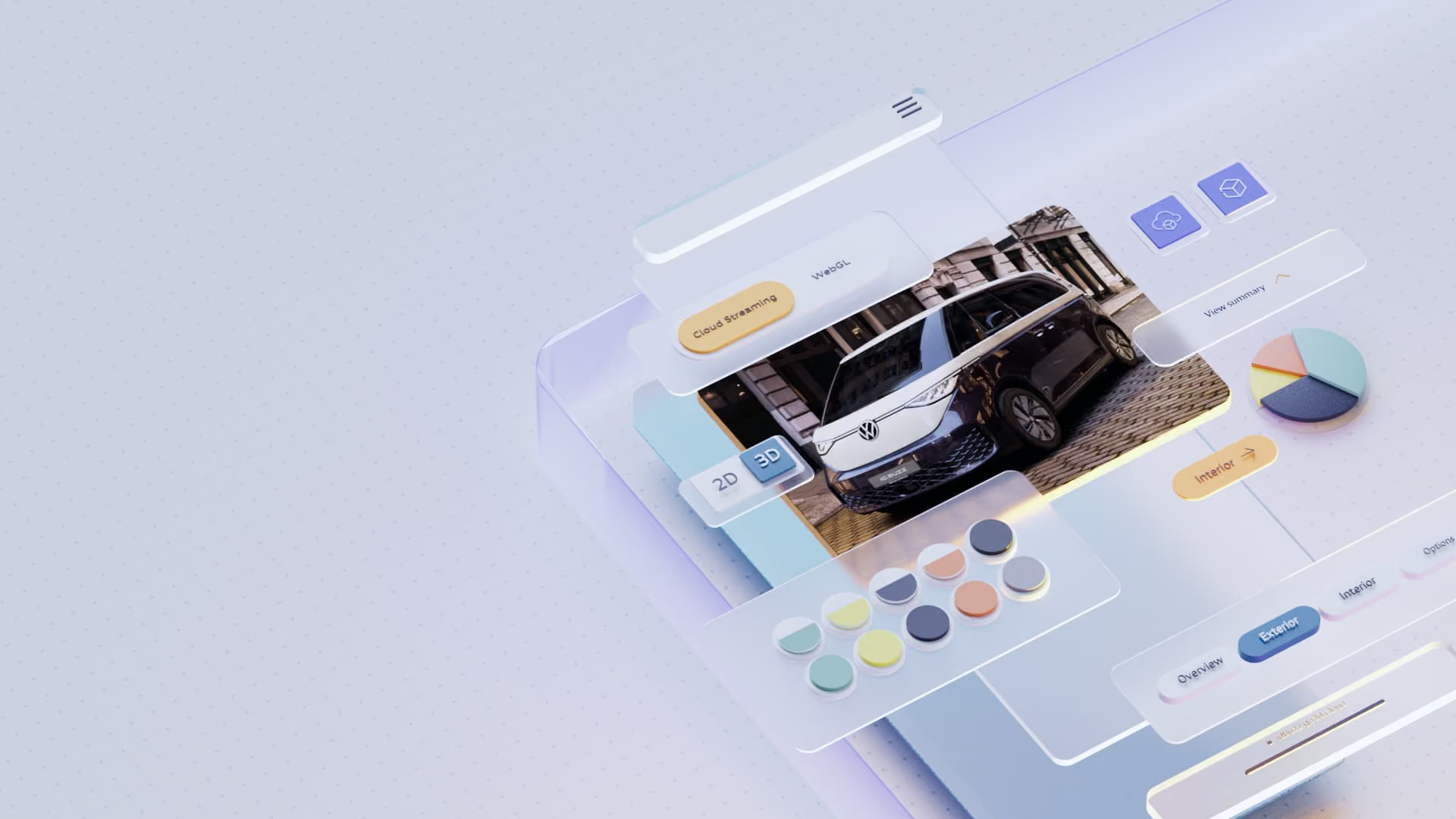
As different industries look to either build or upgrade their product configurators, we can see how heavily influenced they are by the creative and technical ambition of the auto sector. We are seeing this play out in these ways:
Demand for realism and deep logic: Historically, configurators forced brands in other industries to choose between visual quality and complex product logic. Today, the expectation is flawless execution of both; a standard set directly by the latest car configurators.
Slick UI/UX and guided journeys: Users now expect the frictionless, intuitive configuration flows found in the best digital car showrooms.
Configuration-ready 3D pipelines: Brands are adopting automotive best practices, building single-source-of-truth "150%" digital twins that support complex real-time customisation right from the start.
2. Pixel streaming: Bringing Unreal Engine & Unity to the web
Game engines like Unreal and Unity offer incredible visual quality, but distribution has always been a bottleneck. Sharing an interactive 3D app traditionally required high-end local hardware and manual downloads.
Automotive solved this first by embracing pixel streaming. By rendering heavy 3D files in the cloud and streaming them directly to any browser or device via platforms like OmniStream, auto brands proved that high-fidelity experiences can be instantly accessible at scale.
Today, urban planners, training providers, and teams managing large-scale infrastructure projects are adopting pixel streaming to distribute their own massive digital twins without friction.
3. Pixel-perfect digital materials and paints
Replicating the physical detail of multi-coat metallic paints and intricate leather interiors forced real-time automotive CGI to evolve rapidly. For industries outside automotive, this level of accuracy in a real-time interactive 3D scene is now a game-changer.
Global paint manufacturers, textile brands, and industrial coating suppliers are moving away from relying entirely on physical swatches or slower offline rendering. Instead, they are adopting real-time 3D viewers to showcase, validate, and sell their materials digitally, knowing that automotive has already proven the required quality is achievable.
A two-way street for innovation
Bringing ZeroLight’s technology to new industries isn’t just a one-way transfer of knowledge; it’s a catalyst for our own product evolution.
Working alongside pioneers in architecture & real estate, large-scale engineering, and materials manufacturing brings fresh challenges and entirely new perspectives to the table.
This cross-pollination of ideas enriches the entire ZeroLight ecosystem, directly benefiting each industry we serve.

.jpg)
.jpg)